Wednesday, November 25, 2026
Reflecting on Technical Product Leadership in a Social Impact World at Africa Tech Conferences 2026

Author’s Note
Zaheer Jeebhay is a Technical Product & Delivery Manager at Citizen Code, building technology for social impact across Africa and South Asia. Having studied Film and Media at the University of Cape Town, his background brings a different lens to technical product management, particularly in understanding audiences, culture and how people access and interpret information. This informs his approach to building digital products that improve access to information and essential services for underserved communities.
Being a Technical Product & Delivery Manager at Citizen Code, working in the technology for good and social impact sector, comes with a significant responsibility. One of our biggest priorities is making vital information more accessible to underserved communities and ensuring that we’re placing people and their needs at the centre of everything we build. It’s something I’ve come to take very seriously.
Working in social impact means constantly questioning whether the work we’re doing is genuinely benefiting the people we’re trying to reach, or whether our decisions are becoming more influenced by organisational priorities, delivery requirements or funder expectations. I’ve caught myself doing this too, getting so caught up in conceptualising and developing a solution that I sometimes lose sight of who I’m actually building it for.
We talk about impact and measuring the good our products do, but how do we meaningfully measure that when different people have different definitions of what is actually helpful to them? And how do we, as product practitioners, ensure those perspectives inform the decisions we make throughout the product development process?
Through my work at Citizen Code, contributing to the conceptualisation and development of web and chatbot solutions across Africa and South Asia, I’ve become increasingly conscious of how important it is to bring context and history into the conversation, particularly when we think about AI and technology development. We need to be willing to challenge our own assumptions and Western-influenced approaches rather than assuming that the same solutions will work everywhere.
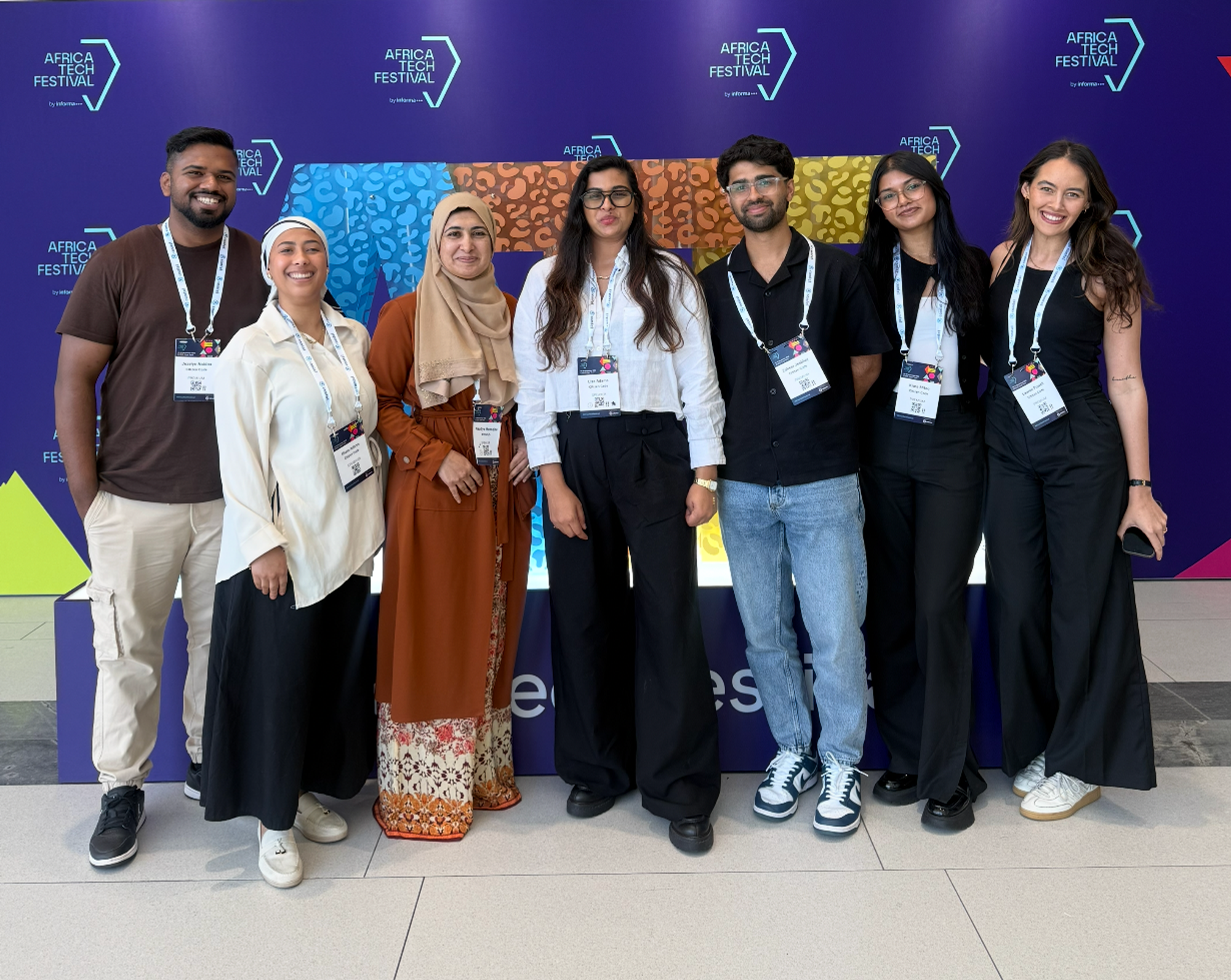
This was very much the perspective I carried with me into the 2026 Africa Tech Festival.
One of the biggest things that stood out to me from the talks and discussions I attended was that successful AI adoption isn’t necessarily about the technology itself, but how prepared organisations are to implement and scale it.
There was a strong emphasis on why AI pilots fail, particularly when organisations lack clear business objectives, try to automate inefficient processes, or don’t have the right data, governance and security foundations in place. In my role, with social impact being the ultimate objective of the products we build, this made me reflect on how we assess organisational readiness before recommending new technology. How do we ensure that what we introduce strengthens an organisation’s ability to serve people without creating additional complexity or dependencies that it may struggle to sustain?
Another important discussion was around the relationship between intelligence and trust, and how both need to develop together for AI to deliver meaningful value. This is particularly relevant when building products that provide access to sensitive information and essential services. The technical decisions we make can directly influence whether someone feels comfortable and confident enough to engage with a service.
I was also particularly interested in the conversations around rethinking how people work alongside AI. It’s not simply about automating tasks, but understanding where human involvement is still essential, how organisations reinvest the additional capacity AI creates, and how we prepare and upskill people for roles that are likely to change. From a product perspective, this raises important questions about where automation genuinely adds value and where retaining human involvement is critical to the quality of the service we’re designing.
The discussion around Africa’s AI advantage also raised some important points around technological sovereignty, making better use of existing infrastructure rather than always needing the latest technology, and ensuring that infrastructure development is driven by actual needs. Working in social impact has made me increasingly conscious of the importance of considering affordability, accessibility, ownership and long-term sustainability when making technical product decisions, particularly in a sector where funding cycles do not always reflect the lifespan of the services communities depend on.
My biggest reflection, however, was around what I felt was missing. While I didn’t attend every talk or discussion, my general impression from the sessions I attended, as well as the companies and solutions showcased across the exhibition stands, was that there was less emphasis on the diverse contexts in which technology is being developed and adopted across Africa.
Alongside the conversations about scaling AI, governance and upskilling, I would have welcomed more discussion around the histories, socioeconomic realities, digital literacy and varying levels of access to technology across the continent.
There’s an important distinction between preparing organisations to adopt AI and understanding whether the approaches we’re taking actually make sense for the people and environments we’re building for.
From a product leadership perspective, AI readiness shouldn’t just be measured by technological capability or organisational efficiency, but also by how accessible, relevant and valuable these solutions are to the people they’re intended to serve.
This is something that has shaped how we build technology at Citizen Code. Understanding the history, culture and lived experiences of the people we’re designing for is an important part of our design and development process. It influences how we define problems, prioritise product requirements and make technical decisions. It also means being willing to challenge our own ideas, question whether a particular technology is appropriate, and reconsider what success should look like beyond the requirements of a project.
That’s also why I particularly enjoyed listening to Njenga Kariuki from Vodacom Fintech Group, Ibrahima Guimba-Saidou from the Partnership for Digital Access in Africa (PDAA), and Uyoyo Edosio from the African Development Bank. Their perspectives brought together considerations around technology, digital access and development that I believe deserve greater prominence in conversations about AI adoption.
We need more perspectives grounded in the diverse realities, challenges and opportunities across Africa, rather than presenting what we believe to be an African approach to AI adoption when, in reality, it may still be largely shaped by Western frameworks and perspectives.
For those of us working in technical product leadership, particularly in the social impact sector, our responsibility goes beyond delivering functional technology. We also have a responsibility to question what we build, why we build it and whose definition of success we are working towards.
As we continue to explore what AI readiness looks like, I think we need to keep asking ourselves a fundamental question: are we preparing people and organisations for technology, or are we preparing technology to meaningfully serve people?
Curious about how history, culture, and technology can come together to build safer platforms — or want to explore how Citizen Code can support your work?
📩 Reach out to us at info@citizencode.co.za
We love meaningful conversations and co-creating tech that remembers, protects, and empowers.
Share this
Blog
Latest read.
Rethinking AI readiness, contextual design and technical product leadership for social impact: reflections from Africa Tech Festival 2026 on who we are actually building technology for.
What happens when a South African video game challenges centuries of colonial storytelling? In this piece, archaeologist and paleoanthropologist Lauren Powell explores Relooted, an upcoming game by Nyamakop that turns the traditional "tomb raiding" narrative on its head. Through archaeology, museums, repatriation, and African history, she unpacks how gaming can become a powerful tool for reclaiming cultural heritage, restoring context to stolen artefacts, and reimagining who gets to tell Africa's stories.

The phenomenon of AI Cannibalism, technically known as Model Collapse, refers to a degenerative process that occurs when generative artificial intelligence models begin to be predominantly trained on data produced by other AIs. This feedback loop creates a "curse of recursion," where the nuances of original human information are lost, resulting in a convergence towards a simplified, homogeneous, and often hallucination-filled reality.

Join us in building digital solutions as a foundation for lasting change.