Sunday, March 8, 2026
I struggled with the idea of writing a “Happy” International Women’s Day post this year. Instead I wrote this reflection.

Authors Note:
Lisa Adams is the Founder of Citizen Code, an African–based technology collective building inclusive digital products for social impact. She has led the design of youth-focused platforms, AI-enabled chatbots, and web ecosystems that reach millions of young people across Africa and East Asia & Humanitarian or conflict-affected regions , with a strong focus on gender justice and digital equity.
She frequently speaks and writes on tech-facilitated gender-based violence, feminist approaches to technology leadership, and the intersection of heritage, culture, and innovation bringing her perspective as a technologist and advocate for accessible, community-rooted digital futures.
“HAPPY” International Women’s Day.
That phrase feels rather tone deaf considering where we are in the world today. Every year we are asked to pause and celebrate women
As we all take time today to acknowledge women across the world, and especially women working in development, humanitarian response and social justice movements, I find myself struggling with the tone that accompanies this day every year. Celebration feels like the expected posture. Gratitude posts, flowers, tributes to resilience and empowerment. Yet when I sit honestly with the reality of what women are experiencing globally right now, celebration feels deeply incoherent.
As a teenage girl, I dreamt of the day I would become a grown woman. Independent of my circumstances. Free from violence and harm. I imagined a life where I could create my own opportunities, shape my own future and eventually return to communities like the one I came from to help build safety and care for girls like me. That dream has quietly guided much of my adult life.
The past ten years of my sixteen year career have been dedicated to the upliftment of women and girls. Not because I woke up one day declaring myself a raging feminist, although yes I rage, and yes I will commit the rest of my career to gender justice. The reason is much simpler. When I looked honestly at the skills I had, the opportunities I had been given and the field I had built a career in through technology, the conclusion became unavoidable. If we want meaningful and sustainable progress in communities, we have to centre the girl child. Not because boys do not matter. They do. But because the evidence repeatedly shows that when women and girls are safe, educated and empowered, the entire community benefits. Empowering women does not diminish boys. It strengthens the environments they grow up in.
Yet today, sitting with the state of the world, what I feel is not celebration but grief. A deep grief that moves through the body like waves of personal memory and collective trauma. To witness the inhumanity unfolding in Iran, and the deliberate targeting of civilians, specifically a school of girls, is devastating. Girls who went to school that morning believing education might be their pathway to emancipation. Girls living within an already oppressive system, holding onto the fragile hope that knowledge could offer them something different. Girls who left their homes expecting to return later that day and share a meal with their families. Girls who may have gone to school to escape violence at home. Girls who may have found the only place of relative safety inside those classrooms.
Girls like I once was. Girls like your daughters who carry their own dreams for the future. Dreams of independence, dignity, opportunity and safety. Dreams that in a single moment were taken from them. Dreams that will never have the chance to surface or grow into the lives they imagined for themselves.
Even if school had been the hardest place in their lives, it was still a place they were supposed to return from. Instead they were killed.
And I cannot ignore the uncomfortable reality that these are brown girls’ bodies. Non western bodies. It forces a question that many people are uncomfortable asking aloud. Would the global outrage look the same if this had been a school full of white girls somewhere in the West?
My heart bleeds for the women in Gaza. Women who are living through the compounded reality of genocide, occupation and displacement, while their experiences as women are often overlooked even within the reporting of those atrocities. Imagine trying to stay alive in the middle of active bombardment while managing something as basic and human as a menstrual cycle. Imagine being pregnant and trying to find somewhere safe to give birth. Imagine giving birth without access to proper medical care, without pain relief and without dignity. Imagine mothers burying their children, their husbands and their neighbours. Or becoming custodians of bodies they cannot even identify.
The women in Sudan are facing horrors that the world can quite literally see from space. From space we can see the scale of destruction and bloodshed unfolding there, literally blood on satelitte images. And still, global attention drifts elsewhere.
So no, it does not feel like a happy International Women’s Day. There is very little to celebrate until the safety and dignity of women and girls everywhere becomes non-negotiable. That means upholding international law and the frameworks that are meant to represent our highest commitment to universal safety and care.
I tried to look closer to home for something that felt more hopeful. But even here in South Africa, where gender based violence has been declared a national crisis, we have not meaningfully entered crisis mode. We have a National GBV Strategy and a National GBV Fund, yet implementation remains painfully slow and impact remains difficult to see. Every day more than three hundred teenage girls give birth in this country. STI rates continue to rise. Clinics are overwhelmed. Jobs are scarce. Rape statistics increase year after year, and even those numbers are incomplete because many women do not trust the system enough to report. The system is failing us. The government is failing us. Communities are failing us.
I also cannot ignore the ways in which technology is beginning to intersect with these harms in new and increasingly dangerous ways. Much of my work sits at the intersection of gender based violence and digital systems, particularly technology facilitated gender based violence. Just this week I wrote about how AI tools like Grok are now being used to digitally remove hijabs and saris from women’s images. At first glance that might appear to be a niche technical issue, but it reflects something much deeper. Digital technologies are increasingly being used to manipulate women’s identities, bodies and cultural markers without consent. Violence against women is no longer confined to physical spaces. It is being reproduced, amplified and normalised within the digital infrastructures we are rapidly building.
I see this tension every day in my own work. I am a woman of colour working within the technology and social impact space, operating both locally and globally. I work alongside extraordinary people and institutions trying to improve sexual and reproductive health and respond to gender based violence. Some of the work I am involved in includes deploying GBV technologies across more than twenty regions globally, many of them in humanitarian or conflict contexts. At the same time I work with grassroots organisations where women accompany survivors to court when nobody else will, organisations fighting constantly for recognition and funding simply to continue doing life saving work.
Much of my professional life involves running back toward the kinds of harms that once nearly destroyed me, trying to transform those experiences into something constructive. Visibility, opportunity, protection and solidarity for the people most affected. Yet even within these spaces I cannot pretend that we are doing enough. There is not enough funding. Systems continue to work against the organisations trying to respond to the crisis. And the voices of women leading this work are still too easily dismissed.
This week I experienced that dismissal very personally. I found myself in conversation with a white male decision maker who lives far removed from the realities women in Africa face in confronting gender based violence. During that conversation he laughed casually about the fact that he had never experienced GBV. The same person who holds the power to make decisions about how resources and support are distributed. That moment stayed with me because it reminded me how easily the lived realities of women can be trivialised by those who have never had to live with them. It is a signal of a broader trend that allows men with little exposure-qualification to continue having power over our safety and our futures.
Yes this reflection is heavy. But we cannot afford to look away right now. We cannot scroll past the trauma being inflicted on women and children across the world and retreat into comfortable narratives of empowerment without confronting the violence that continues to shape women’s lives. Change rarely emerges from comfort. It comes from the willingness to look directly at the harm and refuse to accept it as inevitable.
Despite everything, I still hold onto the dream I had as a young girl. A society that truly cherishes the safety and upliftment of the girl child. Because when she is safe, educated and supported, the entire community thrives.
International Women’s Day 2026, despite the heaviness of this moment, I want to acknowledge the women who have stood beside me this past year. Allies, collaborators and friends in this work. I hope that together we can build something better and make even more progress, so that next year we might have something different to say.
Share this
Blog
Latest read.
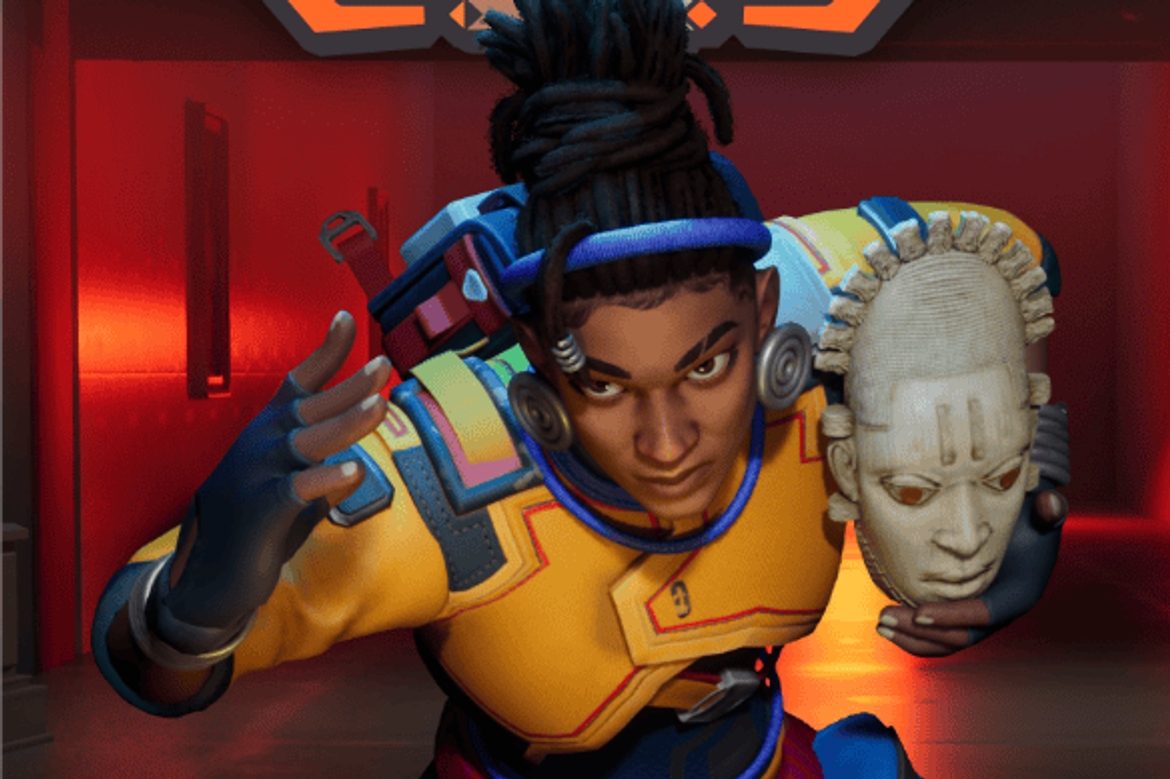
What happens when a South African video game challenges centuries of colonial storytelling? In this piece, archaeologist and paleoanthropologist Lauren Powell explores Relooted, an upcoming game by Nyamakop that turns the traditional "tomb raiding" narrative on its head. Through archaeology, museums, repatriation, and African history, she unpacks how gaming can become a powerful tool for reclaiming cultural heritage, restoring context to stolen artefacts, and reimagining who gets to tell Africa's stories.
The phenomenon of AI Cannibalism, technically known as Model Collapse, refers to a degenerative process that occurs when generative artificial intelligence models begin to be predominantly trained on data produced by other AIs. This feedback loop creates a "curse of recursion," where the nuances of original human information are lost, resulting in a convergence towards a simplified, homogeneous, and often hallucination-filled reality.

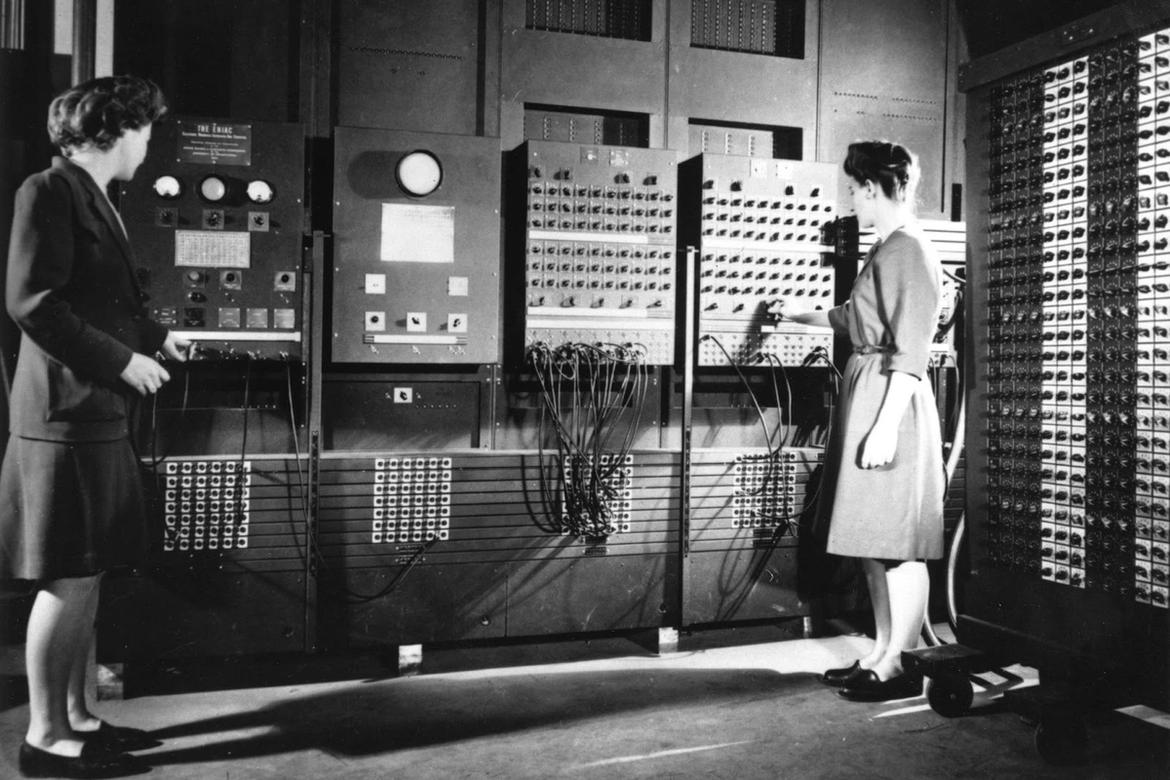
The industry prides itself on being fast-paced, proliferating new ideas and constantly shifting, yet it stays rooted in decades-old biases. In this piece I wanted to highlight the women whom I wasn't taught about, connect their absence in history books to present ideologies, and touch on the link between TFGBV (tech-facilitated gender-based violence), gender norms and misogyny.
Join us in building digital solutions as a foundation for lasting change.